
Löyly: what water on sauna stones changes
Understand why löyly feels hotter, how water use depends on the sauna heater, and what to discuss when choosing heat for a HobbitHut sauna.
A little water on the sauna stones can make the heat feel suddenly stronger. The water evaporates, adding moisture to the hot room. That steam is löyly, a Finnish word that also carries a cultural meaning: UNESCO's account of Finnish sauna describes it as the steam or spirit at the heart of the experience.
For someone used to hearing Finnish sauna called dry heat, the ladle can come as a surprise. Water on stones belongs to the tradition. The useful questions are how the steam feels and what the particular heater is designed to accept.
Why the steam changes the feeling of heat
Your skin can receive heat from moisture as well as from the hot air. In its Finnish-language explanation of löyly, Harvia describes water vapor condensing on the cooler skin. As vapor becomes liquid, it releases energy. This helps explain the rush of heat after water reaches the stones.
Turning up the thermostat and adding water change different conditions. Harvia's temperature guidance describes steam feeling sharper in a hotter room and softer in a cooler one with a suitable stone mass. A thermometer reading alone leaves out that difference.
If you prefer a gentler sensation, describe that preference when discussing a sauna. Ask how the proposed heater produces steam under its intended operating conditions, rather than choosing by the highest temperature on the controls.
The stones need heat of their own
Evaporating water uses energy. Harvia's explanation of sauna heating distinguishes heating the room and its surfaces from heating the stones and generating steam. It also describes a mismatch in which an oversized heater warms the room quickly, before the stones have stored enough heat for löyly.
That makes the air temperature an incomplete readiness signal. Follow the actual heater's heating instructions before adding water. Our open and enclosed stone-heater guide explains the separate question of how equipment stores heat, including designs that maintain hot stones in standby.
Read the water instructions for the model
An electric sauna heater can be designed for water on its stones. The Narvi Smooth manual, April 2026 edition, gives a concrete example on printed page 61: about 0.2 liters, or 200 milliliters, at a time. It also warns against adding water while anyone is next to the heater because the steam can burn.
That quantity belongs to the Smooth's instructions. It is not a HobbitHut specification or a universal ladle size. Before using an unfamiliar sauna, have the host identify the equipment and explain its water procedure.
The same manual specifies clean drinking water with mineral limits and excludes salty or chlorinated water. Keep the manufacturer's water requirements with the operating instructions; filling a bucket from any nearby source can overlook those limits.
In a shared room, ask before adding water
The person holding the ladle changes the conditions for everyone on the benches. At its Vaskiniemi sauna house, the Finnish Sauna Society asks bathers to respect one another's steam preferences and prohibits heat-tolerance competitions.
A brief check with the other bathers gives someone a chance to decline more steam. If you are visiting a hosted session, follow the host's arrangement for who handles the water. Our sauna and banya overview places that shared use of heat within the broader bathing traditions.
Choosing heat for a HobbitHut sauna
HobbitHut's sauna options include wood-burning or electric heat. To discuss löyly, take the next step beyond that fuel choice: identify the proposed model and review its water-use instructions alongside the layout.
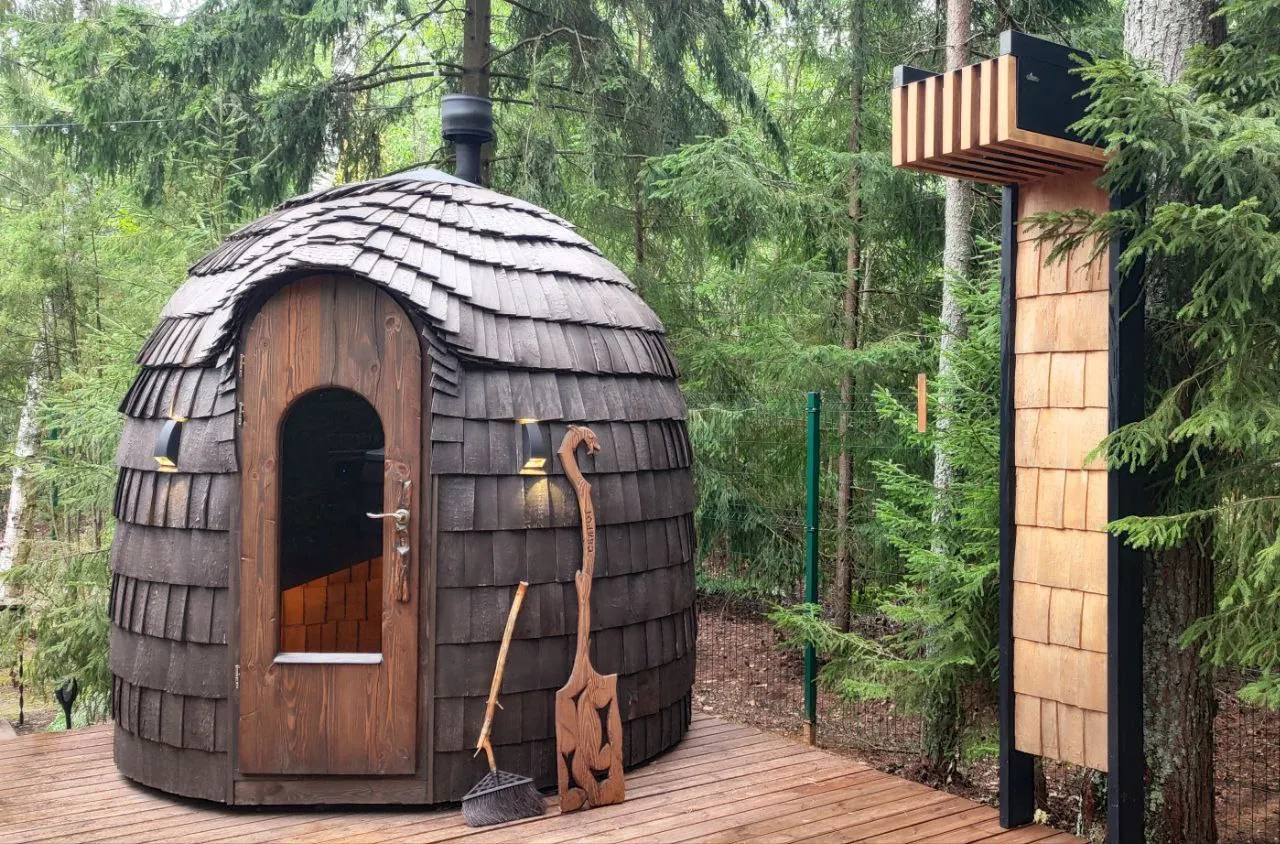
The woodland photograph above shows a rounded shingle exterior, an arched doorway and a chimney. The stone basket is out of view. For your project, ask where the heater would sit and how a bather would reach its intended water-pouring point while keeping clear of hot surfaces.
Tell the UNIKOST project team, which handles HobbitHut enquiries, whether you prefer gentler steam or a hotter room. Have that preference recorded with the proposed heater and its operating guidance when you review the layout.