
Sauna and banya: heat, steam and bathing traditions
Compare Finnish sauna, Russian banya and Nordic bathing customs. Understand temperature, humidity, löyly and enclosed stone heaters before planning your sauna.
Water on hot stones belongs to Finnish sauna culture too. The steam, called löyly, is central to UNESCO's description of the Finnish tradition. So the familiar comparison of a completely dry Finnish sauna with a steamy Russian banya misses something you would notice as soon as someone lifts the ladle.
The more useful comparison is how people combine heat and moisture, prepare the heater and spend time together. A Norwegian fjord sauna, a family banya and a Swedish bastu can share much of the same equipment while offering different kinds of afternoons.
Temperature and humidity describe the bathing climate
A thermometer tells you the air temperature at its location. It does not describe the whole visit: water on the stones changes the humidity, and different heater systems let bathers manage those conditions differently.
For a concrete comparison, Swedish manufacturer Tylö's bathing-format guide gives the following examples. These are its descriptions of bathing formats, rather than national rules or settings prescribed for every person.
| Bathing format | Air temperature | Relative humidity in Tylö's guide |
|---|---|---|
| Traditional sauna | 75–90°C / 167–194°F | 5–15% |
| Soft sauna | 45–65°C / 113–149°F | 30–65% |
| Steam bath | 40–45°C / 104–113°F | 100% |
Notice how the temperature falls as the described humidity rises. A lower thermometer reading can accompany a much wetter atmosphere. The guide's soft sauna uses equipment designed to manage added humidity; choosing a lower thermostat setting alone does not reproduce it.
The label "Russian" or "Finnish" cannot give you the exact climate of a particular room. Ask the host how the sauna is run. For a new sauna, discuss the intended bathing style alongside the proposed heater and its controls.
Russian banya: parenie and the venik
In Russian banya traditions, parenie is the steam-bathing part of the visit. A familiar feature is the venik: a bundle of leafy branches, often birch or oak, used during bathing. A bathhouse may offer an attended session with someone working the whisks, followed by washing and a pause outside the hot room.
That gives the visit a different rhythm from sitting alone beside a heater and watching a clock. The steam and the attendant's movements become part of the experience. Preferences vary between bathhouses and families, so there is no single national thermostat setting that makes a room an authentic banya.
Leafy whisks are shared across bathing cultures. Finnish sauna has its own whisk traditions, and UNESCO includes whisk-making in its account of Estonia's Võromaa smoke sauna. The words and customs differ; the presence of a whisk alone does not identify the country.
What an enclosed kamenka changes
In Russian descriptions, kamenka (каменка) is used for a stone-heating sauna stove. A closed or enclosed каменка keeps the stones inside a chamber, with access through a lid, door or a designed water-delivery route. An open heater leaves its stone bed exposed to the room.
Keeping a stone mass enclosed can help retain heat for bathing. The Finnish Sauna Society's heater explanation describes insulated heat-storing designs that release heat when the stone compartment is opened. This approach also exists in Finnish equipment: the Narvi Aito manual describes a heat-storing stove with stones inside an insulated structure.
The stone chamber and the energy source answer different questions. "Wood-burning or electric?" tells you how energy reaches the heater; "open or enclosed stones?" tells you about its construction. A firebox loaded from another room is a further design choice, not the definition of an enclosed stone chamber.
For equipment selection, ask for a section drawing and the actual model's instructions. Water delivery and the heating sequence depend on that design. The Aito example is a particular heat-storing stove, and its operating procedure should not be transferred to another heater. Our wood-burning versus electric guide covers the separate question of tending a fire or using electric controls.
Norway, Sweden and Estonia bring their own customs
In Norway, badstue is closely tied to the recent growth of waterside public saunas. Visit Norway's account, featuring the Norwegian Sauna Society, describes contemporary saunas shaped around nature and social access. Oslo's floating saunas are one expression of that idea: the view and meeting other people are part of the attraction. Its etiquette advice includes asking before adding water and matching the room's conversational volume.
Swedish bastu culture includes northern traditions as well as urban spas and coastal bathhouses. Visit Sweden describes several settings and notes that clothing rules differ. Check the particular venue instead of assuming that every Scandinavian sauna has the same expectations about swimwear or nudity.
Estonia's Võromaa smoke-sauna tradition, listed by UNESCO in 2014, includes family knowledge about preparing the sauna and making whisks. Families take turns hosting. Its chimneyless construction is a specific tradition with a distinct preparation process; it is not a description of an ordinary modern sauna with a chimney.
These examples also show why "Nordic sauna" is a broad phrase. Public waterfront gatherings, family customs and a private evening in the garden have different expectations, even when water and hot stones are common to them.
Describe the bathing experience you want
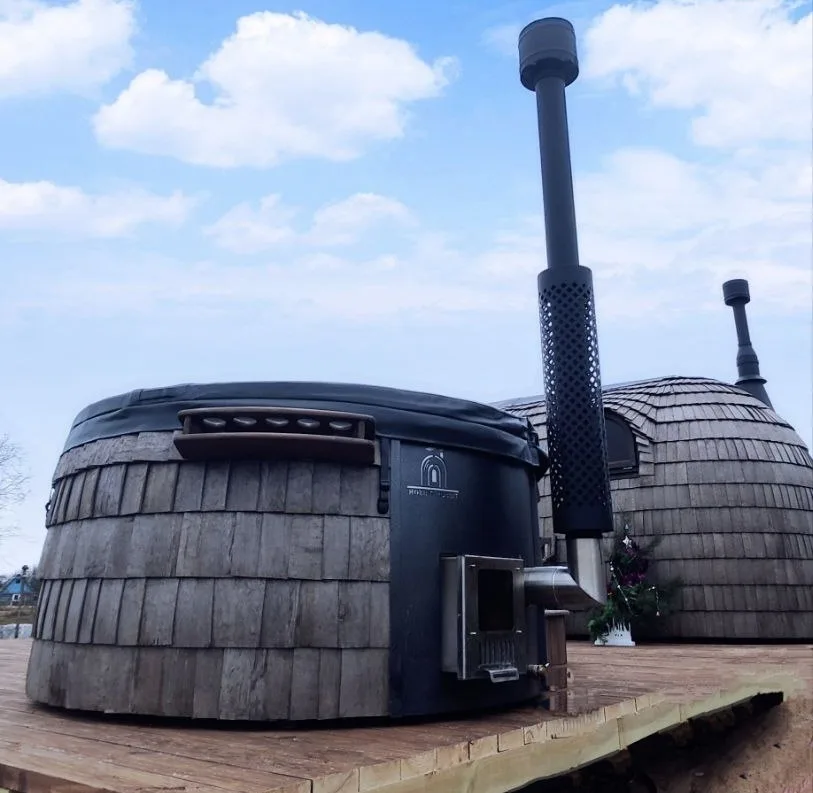
For a HobbitHut project, begin with the experience: a quieter, hotter visit, an interest in more humid bathing, or space for an attended ritual. The proposal needs to establish which conditions the selected equipment can support. The exterior photograph above shows shingle-clad structures and chimneys; it does not reveal the construction of their stone compartments.
HobbitHut's sauna options include changing-room and shower configurations. Those rooms matter when a visit includes time to wash and rest between sessions; our layout guide helps you consider that route. Tell the UNIKOST project team which bathing traditions interest you and who will use the sauna, so the discussion starts with the visit you want to create.