
Wood-burning vs. electric sauna heat: what fits your property?
Compare fire-tending and electric controls, then review the heater, chimney or electrical work needed at your property.
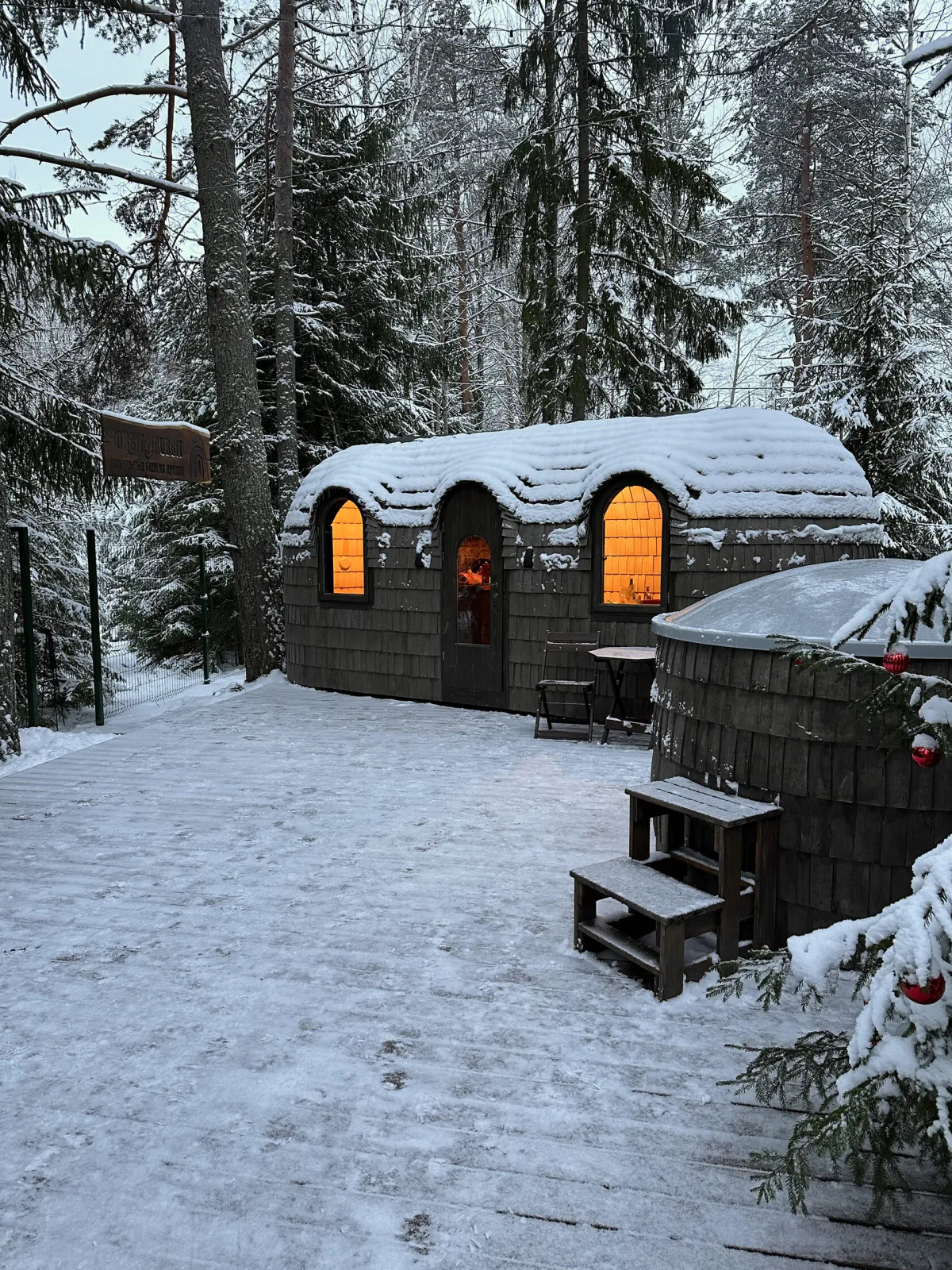
With wood heat, someone brings in fuel and tends the fire. With electric heat, preparation starts with the heater controls. Think about which routine you want on an ordinary evening, and who will handle it when the sauna serves guests.
HobbitHut offers wood-burning and electric heat options. The equipment and the connections need to be reviewed with the room you are ordering. The photograph above shows an exterior in winter; it establishes no warm-up time or heating performance.
If you want wood heat
Plan a dry place for firewood and a route for carrying it to the stove. Include ash handling and chimney service in the operating plan. At a guest property, assign the preparation and shutdown work to a named role before offering fixed booking times.
Review stove placement and the chimney route with the installer, using the proposed equipment's instructions for clearances and protection. The chimney can affect the layout and where the structure sits relative to nearby buildings or trees. Keep that discussion alongside the site plan.
Check current appliance and burn restrictions with the local air-quality authority. The EPA's wood-burning rule examples are an archived record, no longer updated after October 2025. They illustrate different local approaches but cannot establish what is permitted at your address today.
If you want electric heat
Give the electrician the proposed heater model and the distance to the supply. Ask for an assessment of available service and a price for the connections. The controls and any timer or remote-start functions need to suit the way you will operate the sauna.
For shared use, decide who can switch the heater on and who checks the room before a session. Our glamping guide covers the booking and staff arrangements around that decision.
Review the room before selecting the heater
In its heater-sizing guidance, Harvia considers room volume and surfaces such as glass. Its ventilation instructions distinguish electric and wood-burning heaters. These are manufacturer references for the design discussion; they do not identify the heater included in a HobbitHut sauna.
Have the supplier explain the selection for your room, especially if you want panoramic glazing. Request the model documentation and ventilation arrangement together. Any warm-up estimate should describe the room and conditions behind it.
To compare costs, price the same layout with each heat source. Include the stove and chimney work for wood heat, or the heater, controls and electrical connection for electric heat. Use your local energy prices and expected sessions for running costs. Include preparation time if staff will do that work.
Tell HobbitHut which routine you prefer and what you know about the electrical service at the property. If you are still deciding, explain who will prepare the sessions and how often you expect to use the sauna.