
Venik and parenie: the leafy branches of the banya
Understand the venik, the attendant's role in parenie and how a banya visit unfolds, then consider changing and shower space for a HobbitHut sauna.
The leafy bundle in a banya attendant's hands has two jobs: moving warm, moist air toward the bather and making contact with the skin. The bundle is called a venik. In an attended parenie session, the person working it controls the movement and pace, responding to the guest lying on the bench.
Banya No.1 in London describes its parenie through waving and gentle tapping with leafy branches. Those movements explain more than the familiar description of being beaten with a broom. Much of the work happens in the air around the bather.
What goes into a venik
A venik is a tied bundle of leafy twigs with a handle. Birch and oak are familiar choices; Banya No.1 also uses eucalyptus. Its guide to veniks describes the broad oak leaves as useful for shifting steam. The shape of the leaves and the way the bundle holds together affect how the attendant can work with it.
The branches are prepared before the session. In The Bath House's undated visitor booklet, oak and birch bundles are soaked to make them supple and aromatic. That is the operator's description of its practice. Preparation also depends on whether a whisk is fresh, dried or frozen; a single soaking rule would miss those differences.
The Finnish Sauna Society's whisk guidelines show how much care can go into this simple-looking object. Its silver-birch example has clean branches, a handle free of sharp spikes and leaves arranged into a slightly flattened fan. It gives separate instructions for preserving and preparing whisks. Follow the instructions for the whisk you have, and keep it off the heater stones.
How parenie fits into the visit
The Bath House's booklet places parenie within a longer visit: changing clothes, settling at a lounge table and warming in the hot room before treatments. Time outside the hot room is part of that arrangement. Guests have somewhere to return to between sessions.
On its current treatment page, the same operator describes a banshik, or banya attendant, guiding the guest to a private steam room. The attendant works soaked veniks in a rhythmic motion to direct steam toward the body. The booklet asks guests to speak up whenever they feel uncomfortable. Communication belongs in the session from the start.
An attended session can take different forms. Both London operators offer a version with two attendants working together, often called four-handed parenie. Ask what a particular booking includes and how the attendant will check your comfort. A menu name alone gives little sense of the pace or intensity.
Our sauna and banya overview explains the broader bathing traditions. Here, the useful distinction is between sitting in the heat and choosing a session in which another person actively works the air and branches around you.
The related Finnish whisk tradition
Leafy whisks also belong to Finnish sauna culture. The Finnish Sauna Society explains that vihta is the western Finnish term and vasta the eastern one, with regional differences in how the bundles are tied.
That shared use of branches adds detail to the usual sauna-versus-banya comparison. Finnish sauna can include whisking too. The vocabulary and local practice tell you more about a visit than a sharp national dividing line.
Planning the spaces around a HobbitHut hot room
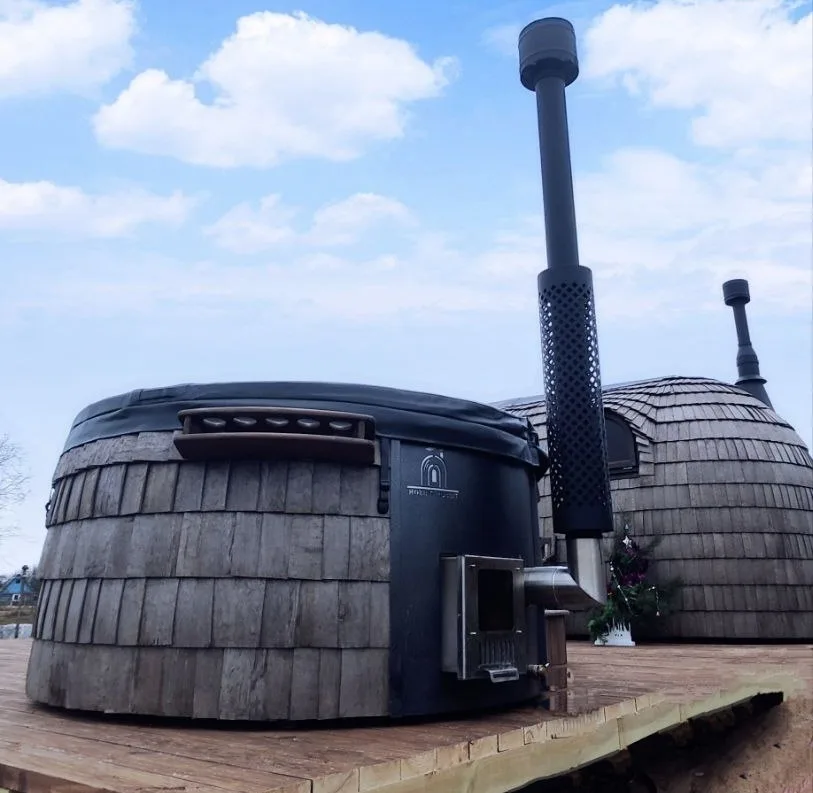
The photograph above shows two HobbitHut sauna exteriors with chimneys on a deck. For the inside, start with a floor plan. An attended session raises a specific layout question: where can a guest lie while the attendant has room to work alongside the bench?
HobbitHut's sauna configurations include a separate changing room and an option with shower facilities. A changing room provides a place for clothes; the shower option addresses washing. Our changing-room and shower guide helps you sketch the route between them and the hot room.
If you want a banya-inspired retreat, describe the attended experience you have in mind when discussing that drawing. Bench dimensions and working space need confirmation in the proposal, while arranging a practitioner is a separate service question. The UNIKOST project team handles HobbitHut enquiries and can discuss the building layout with you.