Swedish bastu culture: a living bathing tradition
Explore Swedish bastu through its 2026 heritage recognition, regional history and one public sauna's rules, with layout ideas for a HobbitHut project.
In May 2026, sauna bathing joined Sweden's national inventory of living cultural heritage. The entry recognizes bada bastu, the practice of taking a sauna, among traditions people continue to pass on in Sweden. This is a Swedish national inventory entry under the country's work with the UNESCO convention; it does not mean Swedish sauna has been added to UNESCO's international Representative List.
Bastu is the Swedish word for sauna. The Institute for Language and Folklore's language guidance traces it to a contraction of badstuga, or bathhouse. The word covers familiar private saunas as well as public bathing places. What you do when you arrive depends on which one you visit.
The historical records show several kinds of bastu
Sweden's archives preserve several uses of the bastu. In an essay drawing on the institute's folklore collections, research archivist Zingoalla Rosenqvist describes responses to a bathing questionnaire circulated in 1938. Some respondents recalled their own lives; others passed on stories from older relatives.
Bathing remained part of life in northern Sweden and in central Sweden's historic Finnish settlement areas. Elsewhere, a building called a bastu might have been used to dry flax or malt. Some buildings served both drying and bathing. These are historical accounts of particular places, rather than instructions for a sauna today.
That regional history helps explain why Swedish bastu shares practices with Finnish sauna while having its own local stories. Our sauna and banya overview introduces the wider family of bathing traditions.
A public sauna has its own rules
Gothenburg's Jubileumsparken offers a useful example for a first visit. The city's current sauna page describes both separated and mixed sessions, with booking normally required and drop-in during the summer season. Check the current arrangement before going.
Its house rules require a shower before bathing and a towel to sit on. Nude bathing is prohibited, and swimwear and towels must be dry or only lightly damp. The same rules prohibit pouring water on the heaters or touching them.
That last point matters if you have just read about löyly and water on sauna stones. A cultural description of steam cannot tell you what a particular venue permits. At Jubileumsparken, leave the heaters alone. At another sauna, read that operator's instructions. Clothing customs also need to be checked for the actual session, rather than guessed from a national label.
The space between sauna visits
The national heritage description of bada bastu includes saunas beside homes and vacation properties. It describes a room for changing, sometimes a shower, and a veranda or terrace where people can sit afterward. Those spaces make the building useful beyond the time spent on a hot bench.
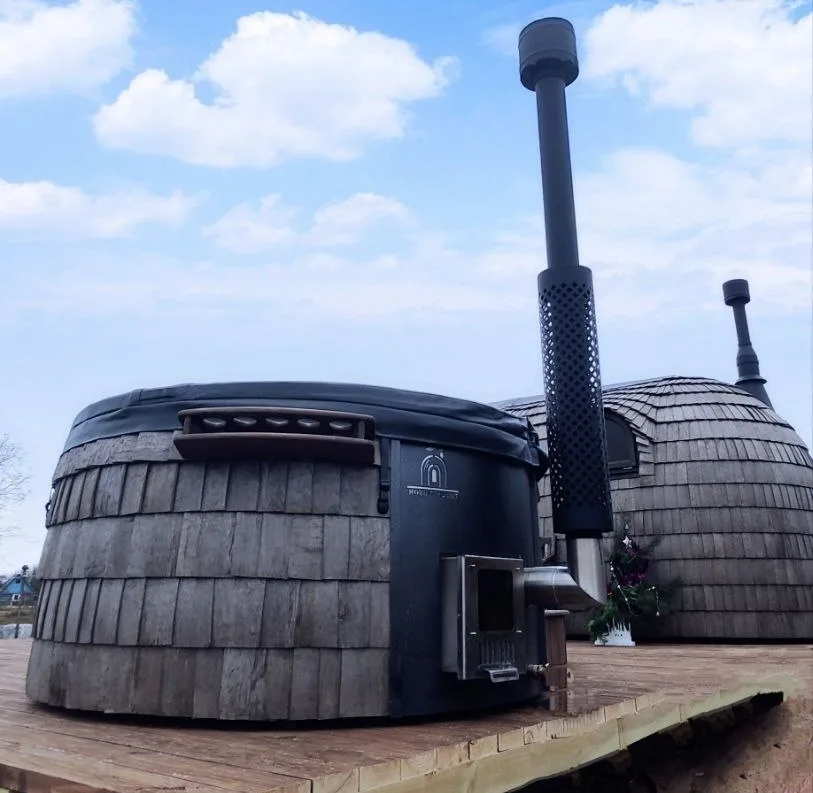
Our HobbitHut photograph shows two rounded shingle exteriors with chimneys on a wooden deck. The deck gives a visible example of space outside the sauna; the photograph does not establish what comes with an order.
HobbitHut's sauna configurations include a separate changing room and shower facilities. If you want a place for unhurried visits with family or friends, start with where clothing will stay dry and where you will sit between visits. Mark those places on your site sketch, then ask which parts belong inside the proposed structure and which require separate outdoor work.
The UNIKOST project team handles HobbitHut enquiries. Send your sketch with the configuration you are considering so the proposal can identify the changing space and the scope of any deck or outdoor seating area.